May 28, 2026
How Long Does It Take to Become an RYA Yachtmaster™?
Richard Beniston


Most candidates take between two and five years to reach the RYA Yachtmaster™ Offshore exam, though intensive fast-track routes can compress that to around 12 to 18 weeks for those starting from scratch with the time and budget to commit full-time. The answer depends on three things: prior experience, how much time you can spend on the water, and how quickly you can accumulate qualifying sea miles.
This guide covers the time to reach the Yachtmaster™ practical exam from various starting points. For the duration of the shorebased component specifically, see our RYA Coastal Skipper/Yachtmaster™ Offshore Theory course page.
The Yachtmaster™ Offshore Certificate of Competence is awarded by the Royal Yachting Association after a practical exam, but the exam itself is the final step in a longer process. Before you sit it, the RYA requires you to log:
- 50 days at sea
- 2,500 nautical miles
- 5 passages of more than 60 nautical miles, including two overnight and two as skipper
- At least half of those miles in tidal waters
- All of the above within the last 10 years
For most people, building that experience is the part that takes the time. Theory and practical courses can be planned around a calendar. Mile-building runs on weather, holidays, and how often you can get on a boat.
About the Author
Richard Beniston is an RYA Yachtmaster™ Examiner for Sail and Power, and one of only 22 RYA Instructor Trainers worldwide. He has 23 years' experience in professional sailing instruction, including three RORC Fastnet campaigns as skipper, Atlantic crossings, and sail training on tall ships in the Baltic. He is Chief Instructor at Sailing Course Online, an RYA-approved online theory provider based at Hamble Point Marina, which delivers RYA Day Skipper and Coastal Skipper/Yachtmaster™ Offshore theory courses to students in over 115 countries.
Learn more about our instructors
What is an RYA Yachtmaster™ Qualification?
The Yachtmaster™ scheme is the senior level of the RYA cruising syllabus. It exists in three forms, each suited to a different scale of sailing:
| Qualification | Range from safe haven | Sea time required | Mileage required | Min age |
|---|---|---|---|---|
| Yachtmaster™ Coastal | Up to 20 nm | 30 days (or 12 with Coastal Skipper cert) | 800 nm (or 400 with cert) | 17 |
| Yachtmaster™ Offshore | Up to 150 nm | 50 days | 2,500 nm | 18 |
| Yachtmaster™ Ocean | Across oceans | Yachtmaster™ Offshore plus 600 nm ocean passage | Qualifying passage of 600 nm non-stop | 18 |
For the rest of this article, when we say "Yachtmaster™" we mean Yachtmaster™ Offshore unless stated otherwise. It is the most common target for people working towards the qualification, and the entry point to most paid skippering work once commercially endorsed.
The qualification is recognised internationally and is the standard reference for professional skippers in the yacht charter, delivery, and superyacht industries.
How Long Does It Really Take? Three Honest Timelines
There is no single answer to how long it takes to become a Yachtmaster™. The realistic timeline depends almost entirely on where you are starting from. Here are the three most common starting points and what each tends to look like in practice.
If You Are a Complete Beginner
For someone who has never sailed, there are two routes.
The self-build route is the slower one. You start with Competent Crew or family sailing, work through Day Skipper theory and practical, then build experience gradually through your own sailing, mile-building weeks, charters, and time as crew on other people's boats. You will also need to complete the Coastal Skipper/Yachtmaster™ theory, attend a first aid course, gain your SRC radio licence and ideally do the Coastal Skipper practical course and some mileage-building trips under the guidance of an instructor. For most people fitting this around work and family, this route takes three to five years, sometimes longer.
The fast-track route compresses the whole process into one continuous block. Programmes typically run 12 to 18 weeks, taking a complete beginner through all the theory, practical courses, mileage requirements, and prep weeks back-to-back. This route works for people who can commit full-time and have the budget to match. Total cost is usually in the £15,000 to £25,000 range, depending on the provider and what is included.
The fast-track route gets you to exam-eligible quickly. Whether it gets you to exam-ready is a separate question, which we will come to.
If You Are an Experienced Cruiser Without RYA Paperwork
This is probably the most common situation. You have been sailing for years, perhaps with your own boat or as part of someone else's crew. You can navigate, handle a yacht in a blow, and you have miles in the logbook. What you may not have is the structured theory background or the qualifying passages that meet RYA criteria.
For experienced cruisers, the limiting factor is usually theory and qualifying passage structure rather than total miles or days. Working through Day Skipper Theory and then the Coastal Skipper/Yachtmaster™ Offshore Theory course typically takes 6 to 12 months at a reasonable pace. Restructuring sailing time to include the qualifying passages, then the prep week and exam, takes another year or so.
Realistic total: 12 months to 3 years.
If You Already Hold Day Skipper
You are roughly halfway there in terms of theory and practical foundation. The Coastal Skipper/Yachtmaster™ Theory course covers what you still need to know. The Coastal Skipper Practical course is not a prerequisite, but it shortens the gap considerably and is worth doing for the structured boat-handling time alone.
From Day Skipper to Yachtmaster™ Offshore prep week typically takes one to three years, depending on how actively you sail in that period. The biggest variable is mile-building.
What Are the Prerequisites for the Yachtmaster™ Offshore Exam?
Before the RYA will let you sit the exam, you need to present a logbook showing:
- 50 days at sea, with at least 5 days as skipper
- 2,500 nautical miles logged, all within the last 10 years
- 5 passages of more than 60 nm, measured along the rhumb line from start to finish
- 2 of those passages overnight
- 2 of those passages as skipper
- At least 50% of qualifying mileage in tidal waters
- All qualifying passages on vessels between 7 and 24 metres in length
- A valid GMDSS Short Range Certificate (the SRC, or a higher VHF qualification)
- A valid RYA First Aid certificate or accepted equivalent (STCW or Seafish)
- Minimum age 18
The RYA permits 50% of the qualifying mileage (1,250 nm) to be gained on vessels over 24 metres (up to 500 GT), which matters for candidates working in the superyacht industry. The other 50% must be on vessels under 24 metres. Sea time over 500 GT requires direct confirmation with the RYA.
What Counts as a Qualifying Day?
A qualifying day is 24 consecutive hours living on board. This catches a lot of people out. Long day sails, even 10-hour ones, do not count toward your days requirement unless you are sleeping aboard as part of a multi-day cruise.
Weekend trips from Friday evening to Sunday count as two days. Week-long charters or cruises are the most efficient way to build days. Day sailing builds miles but not days. If you only ever go out for the day, you will hit the 2,500 nm mileage requirement long before you hit 50 days.
What Counts as Tidal Waters?
Anywhere where published tidal stream, current, or tidal range data exists and the values are significant enough that you have to take them into account when planning a safe passage. The Solent qualifies. The Mediterranean broadly does not. The west coast of Scotland, the English Channel, the Irish Sea, the Bay of Biscay, and the North Sea all qualify.
What Counts as a Qualifying Passage?
A passage of more than 60 nautical miles measured along the rhumb line (the direct line) from departure port to arrival port. Not 60 miles of distance sailed. If you sail 80 miles in a loop and finish near where you started, that is not a qualifying passage. The two overnight passages must include hours of darkness, and two of the five passages must have been undertaken with you acting as skipper.
How Long Does It Take to Build the Qualifying Miles?
For most people working full-time and sailing recreationally, this is where the real timeline lives. The exam, the prep week, and the theory courses are predictable. Mile-building is not.
A rough guide:
- Active cruising owner (own boat, sails most weekends and several longer cruises per year): 2,500 nm in 2 to 3 years
- Charter and mile-builder weeks (one or two weeks abroad per year, occasional UK trips): 2,500 nm in 3 to 5 years
- Casual sailor stepping up the pace: longer than 5 years unless something changes
Delivery trips, mile-builder passages, and Atlantic crossings as crew are the fastest legal ways to accumulate miles. A single Atlantic delivery can yield 3,000+ miles in three weeks, though those miles need to be supplemented with tidal-water sailing closer to home to meet the 50% rule.
What's the Typical Pathway Before the Exam?
There is no fixed order required by the RYA, but the typical sequence looks like this:
- RYA Day Skipper Theory, the foundation shorebased course.
- RYA Day Skipper Practical, 5 days on the water applying the theory.
- RYA Coastal Skipper/Yachtmaster™ Offshore Theory, the shorebased component the Yachtmaster™ exam draws on. The course page covers what is included, the four exams, and how the online format works.
- RYA Coastal Skipper Practical (optional but recommended), 5 days building skipper-level decision-making in coastal waters.
- Mile-building, the bulk of the time, ongoing throughout the pathway.
- Yachtmaster™ Prep Week, 5 days with an instructor before the exam, polishing weak areas and getting into exam mode.
- Yachtmaster™ Offshore Exam, the assessment itself.
Many candidates also take the SRC/VHF radio course and an RYA First Aid course earlier in the journey, since both are prerequisites to sit the exam.
The two shorebased courses combined typically take around 6 to 12 months at a part-time pace. Practical courses are 5 days each. The rest of the timeline is mile-building and exam preparation.
The Fastrack to Yachtmaster™ programme bundles the three theory courses (Day Skipper, Coastal Skipper/Yachtmaster™ Offshore, and SRC/VHF) into a single package for candidates who want the shorebased side completed in one go.
What Happens at the Yachtmaster™ Offshore Exam?
The exam is a practical assessment conducted on a yacht by an external RYA examiner. It typically runs for 8 to 12 hours per candidate. When several candidates sit together, it can extend over two full days and nights, with everyone aboard acting as crew while each candidate is examined in turn.
You will be asked to:
- Plan and execute pilotage into and out of harbours, by day and by night
- Demonstrate boat handling under sail and power
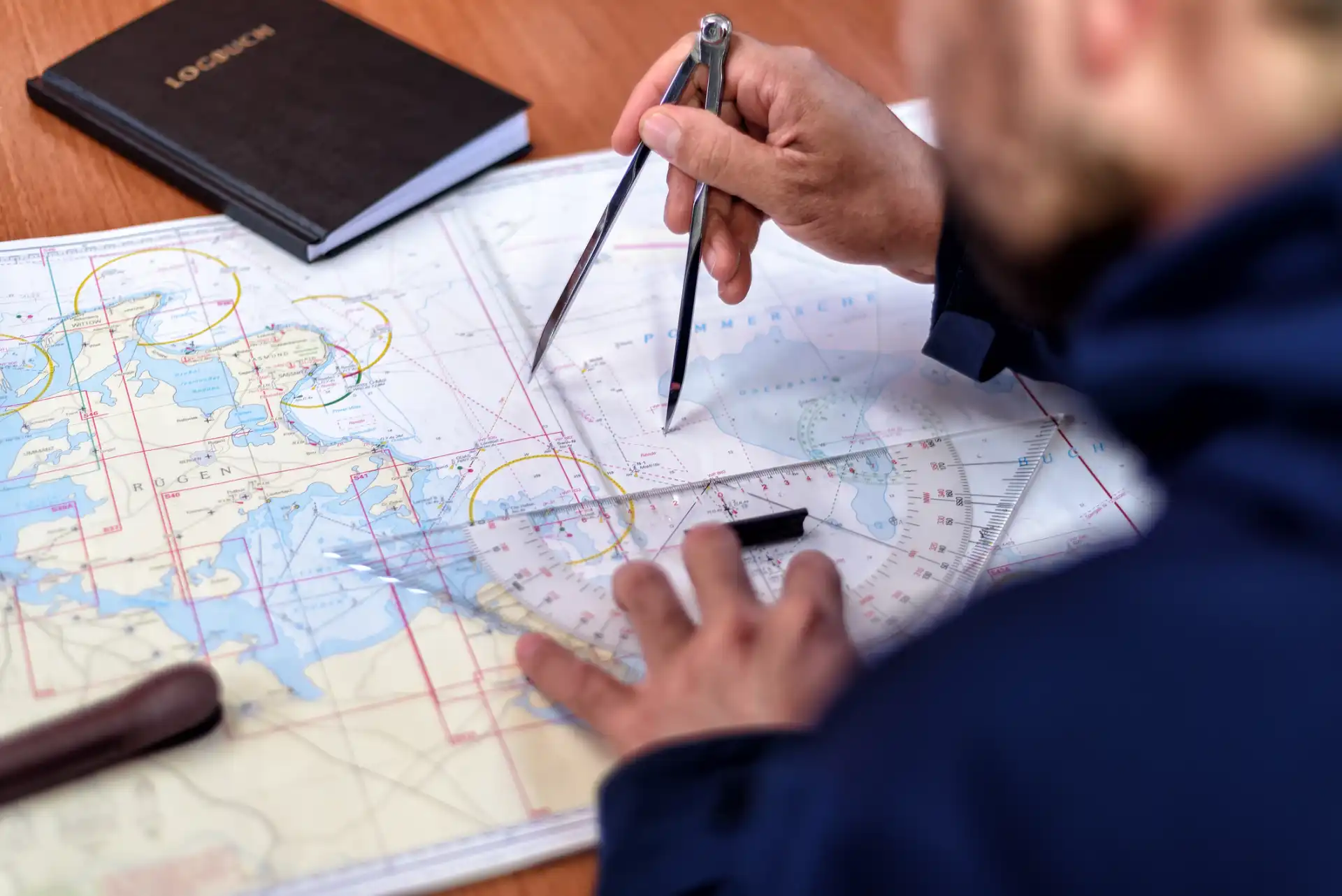
- Navigate using both electronic and traditional methods, including positional fixing
- Manage a crew, including briefing them and giving clear instructions
- Handle an emergency scenario, typically man overboard
- Answer questions on collision regulations, safety equipment, weather, and tidal calculations
The exam is structured to test judgement under realistic conditions, not just technical knowledge. The examiner is looking for someone who could safely take command of a yacht and crew on a passage in moderate and rough conditions, make sound decisions under pressure, and recognise when something is outside their experience.
The Gap Between 'Eligible' and 'Ready'
In my experience as an examiner, the candidates who pass first time tend not to be the ones with the most miles or the most expensive training pathway. They are the ones who have spent time being responsible for the boat, the crew, and the decisions, rather than just being on board while someone else made them.
Meeting the RYA's eligibility criteria gets you to the exam. Being ready is a separate thing. The most common reason candidates struggle in the exam is not a knowledge gap. It is the gap between knowing what to do and actually doing it, calmly, while the wind is shifting and the crew is asking questions.
This is why prep weeks exist, and why most candidates benefit from one even if they think they do not need it. A good prep week tells you honestly where you sit before the examiner arrives.
What Comes After the Yachtmaster™?
For most candidates, the Yachtmaster™ Offshore is the destination. For some, it is a step toward:
- Commercial endorsement, the bridge between a recreational Yachtmaster™ and paid skippering or instructing work. Administered by the RYA on behalf of the Maritime & Coastguard Agency.
- Yachtmaster™ Ocean, the next level up, focused on ocean passage making and astronavigation. Requires a 600 nm non-stop ocean qualifying passage of at least 96 hours, with at least 200 nm of it more than 50 nm from charted land.
- Cruising instructor or Yachtmaster™ Instructor qualifications, for those moving into teaching.
Frequently Asked Questions
How many miles do you need for an RYA Yachtmaster™?
For Yachtmaster™ Offshore, 2,500 nautical miles, with at least half in tidal waters and all logged within the last 10 years. For Yachtmaster™ Coastal, 800 miles (or 400 if you hold the Coastal Skipper practical certificate).
Can I do Yachtmaster™ without Day Skipper?
Yes. There is no formal requirement to hold Day Skipper before Yachtmaster™. In practice, most candidates work through Day Skipper because it provides the foundation. Skipping it usually means filling the same knowledge in another way.
How hard is the RYA Yachtmaster™ exam?
It is demanding but fair. The exam tests practical skippering under realistic conditions and runs for 8 to 12 hours per candidate. Most candidates who present after a proper prep week and with the right experience pass first time. Those who present underprepared, or who have logged the miles without actually being responsible for the boat, tend to find it harder.
Can you become a Yachtmaster™ in a year?
Only via an intensive fast-track route, and only if you can commit full-time and meet all the mile requirements during the programme. Fast-track providers can take a complete beginner to exam in 12 to 18 weeks. For someone already working with a Day Skipper qualification and trying to fit it around a job, one year is realistic only if you sail very actively in that period.
How much does it cost to become an RYA Yachtmaster™?
Costs vary widely. Self-built over several years, with theory courses, practical courses, mile-building, prep week, and exam, expect a total in the region of £6,000 to £10,000 if you do not already own a boat. Full-time fast-track programmes typically cost £15,000 to £25,000 depending on inclusions.
What's the difference between Yachtmaster™ Coastal and Offshore?
Yachtmaster™ Coastal certifies you to skipper a yacht up to 20 nautical miles from a safe haven. Yachtmaster™ Offshore extends that to 150 nm and is the standard reference for commercial skippering work.
Do I need to do a prep week before the exam?
It is not a formal requirement, but the vast majority of successful candidates do one. A prep week gives you 5 days with an instructor working through the areas you will be examined on, in exam conditions.
What happens if I fail the Yachtmaster™ exam?
The examiner will identify specific areas to work on. You will typically return to mile-building or further training to address those areas, then re-sit the exam at a later date. Failure on a specific element rather than the whole exam can sometimes be addressed more quickly.
Where can I do my Yachtmaster™ exam?
Anywhere with an RYA Recognised Training Centre that runs Yachtmaster™ exams and with access to an RYA examiner. The Solent is one of the most common locations, partly because the tidal range, traffic, and pilotage challenges meet the RYA's criteria for a properly testing exam environment.
In Summary
The answer to "how long does it take to become a Yachtmaster™?" is that it depends on where you are starting and how much time you can give to it. For most people working towards it part-time, two to five years is realistic. For full-time intensive routes, 12 to 18 weeks is achievable.
What does not change is what the qualification represents at the end of the process. The miles, the days, the passages, and the exam are all there to ensure that anyone holding the certificate has been responsible for a yacht and a crew in conditions that test them. Meeting the criteria is the structure. Being ready is the goal.
If you are at the start of that pathway, the RYA Day Skipper Theory course is the right place to begin. If you are closer to the exam, the Coastal Skipper/Yachtmaster™ Offshore Theory course covers the shorebased syllabus the exam draws on.