Dec 23, 2025
What is Passage Planning? The Complete Guide
Russell Lake


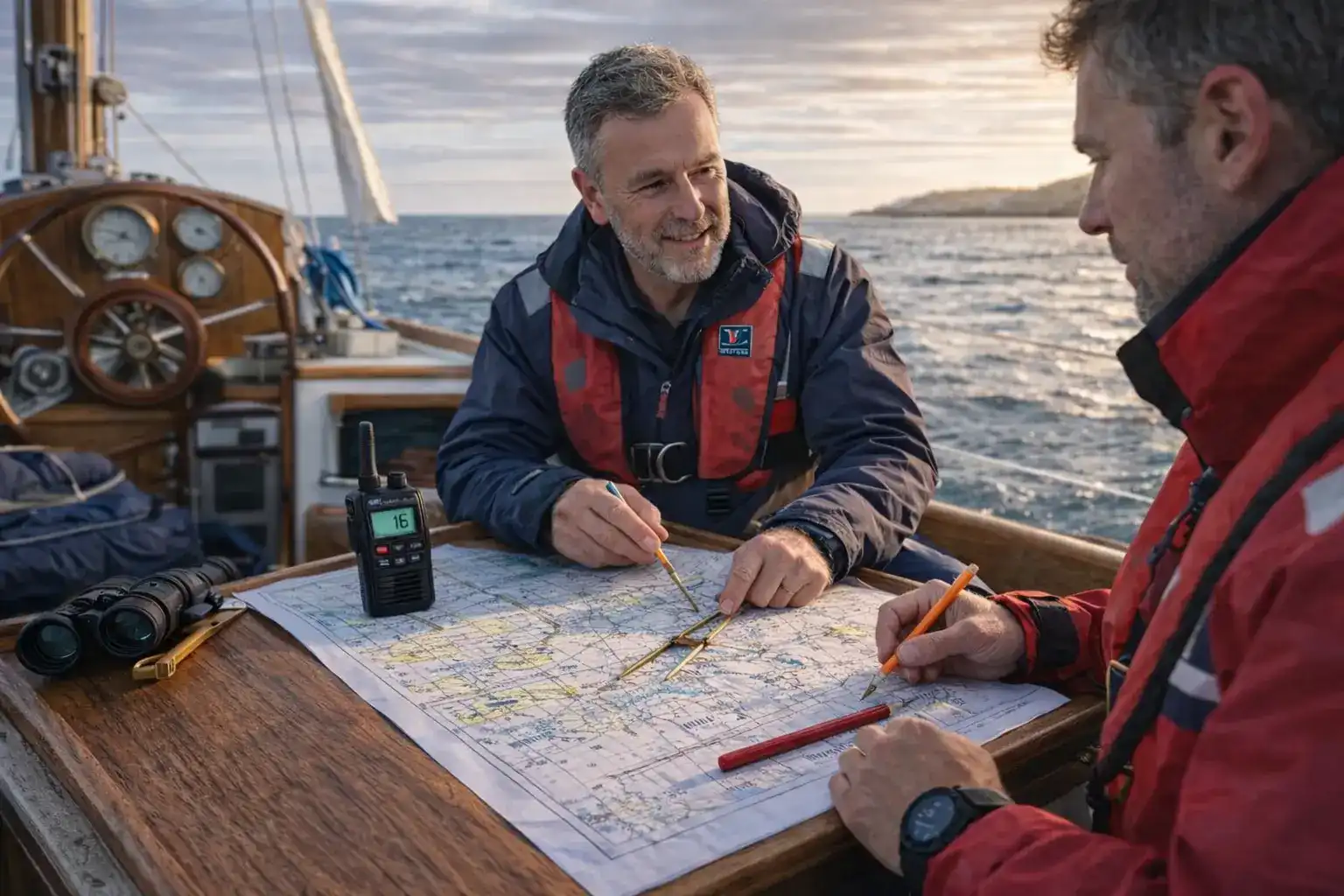
Passage planning is the process of preparing a detailed route for a vessel's journey from one location to another. It covers charted route, weather assessment, hazard identification, fuel calculations, and contingency procedures.
For recreational sailors, passage planning is a core component of both the RYA Day Skipper theory course and the RYA Coastal Skipper/Yachtmaster theory qualifications. It's also a legal requirement under international maritime regulations.
The 4 Stages of Passage Planning
Every passage plan follows four stages. The same framework applies to a short coastal hop or an offshore crossing.
Stage 1: Appraisal
The appraisal stage is about gathering information before you plot the route:
- Charts and publications for the passage area
- Weather forecasts and GRIB files
- Tide tables and tidal stream atlases
- Notices to Mariners and navigational warnings
- Port information and pilotage guides
You're looking for potential hazards, tidal constraints, and any regulatory requirements that affect your intended route.
Stage 2: Planning
Now you plot the actual route on your charts and the vessel's electronic chart system:
- Waypoints with bearings and distances
- Preparation for creating Course to steer calculations on passage (allowing for tidal streams and wind driven leeway)
- Safe water margins and clearing bearings
- Contingency anchorages and bolt holes
- Fuel and time calculations
Include "abort points" in your plan. These are predetermined positions where you'll decide whether to continue or divert based on conditions.
Stage 3: Execution
Execution means putting your passage plan into action. Before departure, brief the crew on:
- The planned route and expected duration
- Course shaping to keep vessel on track between waypoints
- Watch systems and responsibilities
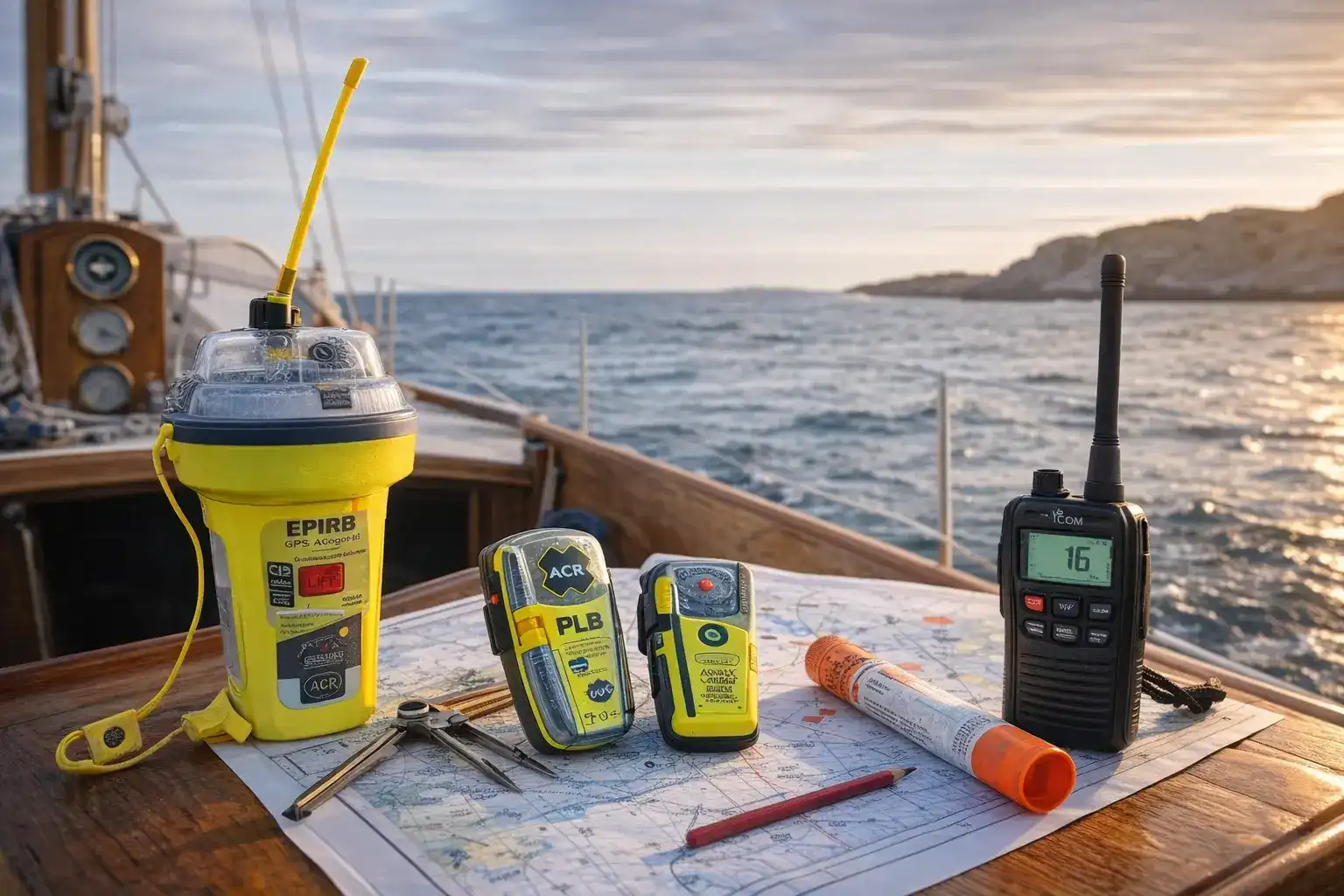
- Emergency procedures and equipment locations
- Communication protocols
The skipper keeps responsibility for navigation decisions, even when someone else is on the helm.
Stage 4: Monitoring
Monitoring continues throughout the passage:
- Regular position fixes (GPS, visual bearings, radar)
- Cross-checking electronic navigation with traditional methods
- Weather monitoring and forecast updates
- Adjusting the plan when conditions change
A passage plan is a living document. If conditions deteriorate or new information comes in, update your plan.
Why is Passage Planning Important?
Passage planning serves three purposes: safety, legal compliance, and efficiency.
Safety at Sea
The main purpose of passage planning is preventing accidents. A thorough plan identifies hazards before you encounter them: submerged rocks, shipping lanes, lee shores, tidal races. It also gives you contingency options if conditions change.
Many maritime incidents come down to poor planning rather than equipment failure. A proper passage plan reduces the chance of finding yourself in a situation you can't handle.
Legal Requirements
Under the International Maritime Organization's SOLAS regulations (Chapter V, Regulation 34), passage planning is mandatory for vessels on international voyages. Recreational vessels aren't strictly bound by SOLAS, but the same principles apply.
In the UK, the Maritime and Coastguard Agency's MGN 315 provides guidance on passage planning for small vessels. Following these standards shows due diligence, which matters if anything goes wrong.
Efficient Navigation
Good passage planning saves time and fuel. Understanding tidal streams lets you work with the current rather than against it. Spotting weather windows means you can make passages in better conditions.
A well-planned passage is usually shorter and more comfortable than one left to chance.
What Should a Passage Plan Include?
A passage plan should cover these elements:
- Route Information: Waypoints, bearings, distances, ETAs
- Tidal Data: Heights of tide, stream rates and directions, tidal gates
- Weather: Forecast summary, wind limits, sea state expectations
- Hazards: Marked dangers, traffic separation schemes, restricted areas
- Contingencies: Bolt holes, emergency anchorages, abort criteria
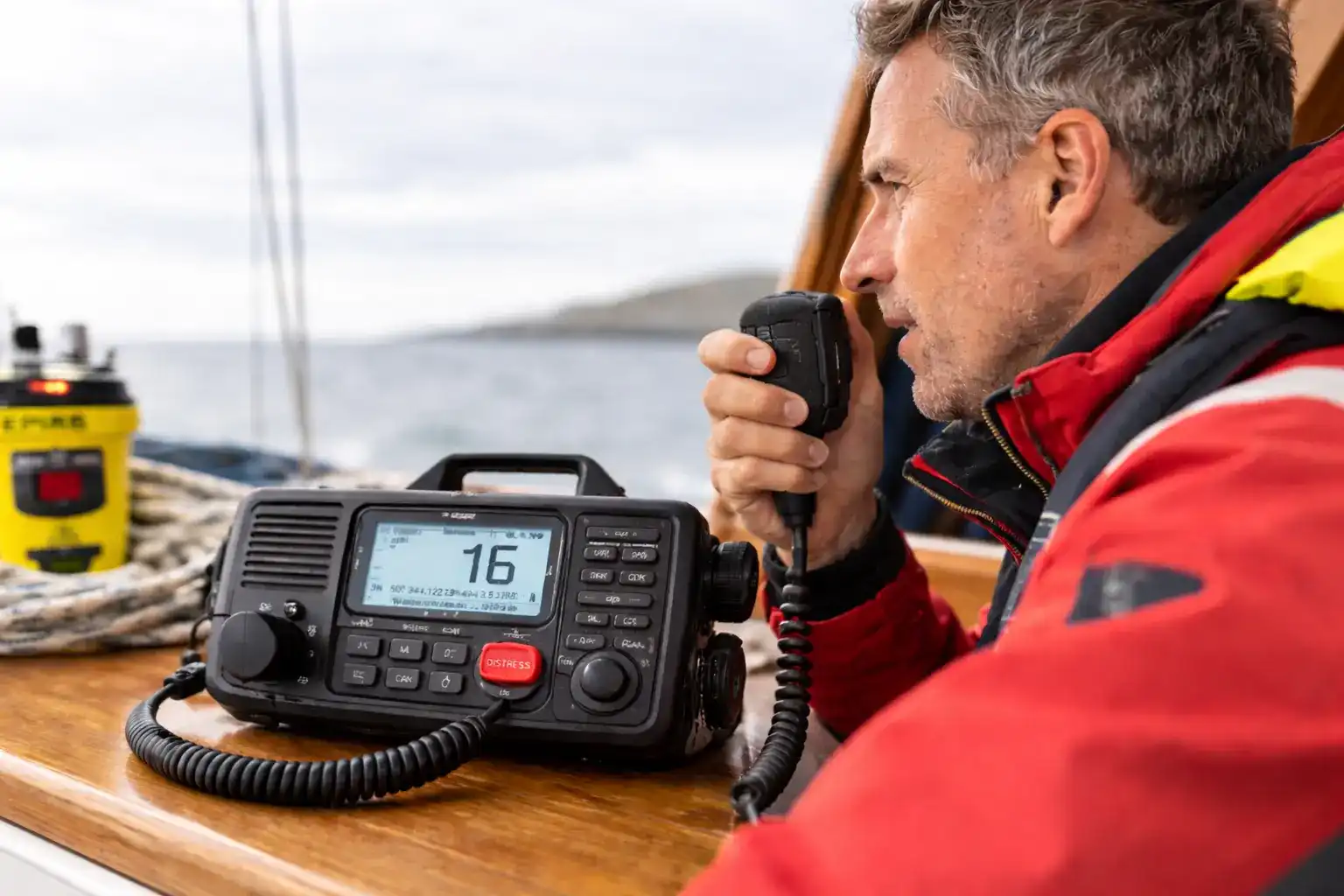
- Communications: VHF channels, port contacts, Coastguard information
Passage Planning Tools and Resources
Modern passage planning combines traditional publications with digital tools. Here's what experienced sailors use.
Essential Publications
Reeds Nautical Almanac is the standard reference for UK and European waters. The 2025 edition contains over 700 harbour chartlets, tide tables, 7,500 waypoints, and passage notes covering the coastline from Denmark to Gibraltar. Updated annually with around 45,000 changes. Published by Adlard Coles Nautical.
Admiralty Publications: For offshore passages, the Admiralty Sailing Directions (known as Pilots) cover coastal waters worldwide in 76 volumes. Ocean Passages for the World (NP136) provides routing information for ocean crossings, including wind and current data for both powered and sailing vessels. These are the same publications used by commercial shipping.
Pilot Books: Publishers like Imray produce detailed cruising guides for specific areas. These contain harbour approaches, anchorages, and local knowledge that you won't find on charts alone.
Weather Sources
Met Office Forecasts: The Shipping Forecast is broadcast on BBC Radio 4 at 00:48, 05:20 and 17:54 (weekends). It covers 31 sea areas around the British Isles with gale warnings, wind speed and direction, and visibility. The Inshore Waters Forecast covers up to 12 miles offshore and is more relevant for coastal passages. Both are available on the Met Office website, but the MCA advises that internet access should not be your only source of weather information.
GRIB Files: GRIB (Gridded Binary) files provide numerical weather data that can be displayed on chartplotters and navigation software. They show wind, pressure, and wave forecasts at specific time intervals. Useful for visualising how conditions will change during a passage, but they're model predictions rather than observations.
Forecast Apps: Apps like Windy and PredictWind aggregate data from multiple weather models. They're useful for comparing forecasts and identifying when models disagree. Cross-reference with official forecasts rather than relying on them alone.
Navigation Apps and Software
Navionics: Widely used chart app covering most cruising areas worldwide. Offers detailed vector charts at a fraction of the cost of individual chartplotter cartridges. Useful for planning and as a backup, but not a replacement for proper charts on your main navigation system.
Savvy Navvy: A UK-developed app that calculates routes based on weather, tides, and your boat's specifications. It factors in tidal streams when suggesting departure times and routes. Tested by Yachting World, who noted it recognises hazards like tidal races and traffic separation schemes. The routing algorithm is ambitious but should be cross-checked, particularly near shallow water. Visit Savvy Navvy
Weather Routing Software: For longer passages, software like qtVlm or FastSeas can calculate optimal routes based on weather forecasts and your boat's polar data. FastSeas uses NOAA GFS weather data and is free for basic use. These tools are valuable for ocean passages where the difference between routes can mean days of sailing time.
A note on electronics: Apps and software are aids to planning, not replacements for the underlying skills. You need to understand chartwork, tides, and weather interpretation to use these tools effectively and to cope when they fail. The RYA courses teach these fundamentals before introducing electronic navigation.
Passage Plan Example: Solent to Poole
Here's an outline of what a passage plan might look like for a common UK coastal passage.
Appraisal
- Distance: approximately 25 nautical miles
- Charts required: SC5600.6 (Solent), SC5601.11 (Approaches to Poole)
- Key hazards: Shingles Bank, North Channel training wall, Poole Bar
- Tidal considerations: Poole Harbour has a double high water; entrance is shallow at low water springs
- Traffic: Poole has regular commercial ferry traffic
Planning
- Departure: Cowes, timed to carry the west-going stream
- Route: Exit western Solent via North Channel, then direct to Poole fairway buoy
- Waypoints: Hurst Point, Anvil Point (clearing bearing), Poole fairway
- Contingency ports: Lymington (1 hour back), Studland Bay (anchor)
- Abort point: Anvil Point. If conditions deteriorate, bear away to Studland
Execution Checklist
- Weather check: Met Office inshore forecast, visual conditions
- Crew brief: route, timing, watch system, location of safety equipment
- Communications: VHF check, Poole Harbour Control on Ch 14
- Shore contact: expected arrival time filed with someone ashore
Monitoring Points
- Position fix at Hurst Point: confirm tidal stream as expected
- Anvil Point: go/no-go decision based on conditions
- Poole Bar: check depth against tide calculations before crossing
This is a simplified example. A full passage plan would include tidal calculations, course to steer working, and more detailed contingency planning.
Common Passage Planning Mistakes
Not Building in Flexibility
Weather and sea conditions can change faster than forecasts predict. Have multiple contingency options rather than a single fixed route.
Trusting Electronics Too Much
GPS and chartplotters are useful, but they can fail. Your passage plan should include traditional navigation methods (compass bearings, transits, depth contours) as backup. Get into the habit of cross-checking electronic positions with visual fixes.
Rushing the Appraisal
Skipping steps in the appraisal stage leads to gaps in your plan. Missing a tidal gate or overlooking a hazard can turn a routine passage into a difficult one. Take the time to gather the information you need before departure.
How to Learn Passage Planning
Passage planning is taught as part of the RYA shorebased theory courses. The syllabus builds your skills in stages:
Day Skipper Theory
Covers the basics of passage planning for coastal waters. You'll learn to create plans for day passages in familiar waters, using charts, tide tables, and weather forecasts. Start the Day Skipper course
Coastal Skipper/Yachtmaster Theory
Takes passage planning further with offshore passages and more challenging conditions. You'll work with weather routing, ocean currents, and longer voyages. Start the Yachtmaster course
Both courses include practical chartwork exercises where you'll create passage plans using real charts and publications. These are the same skills you'll use when planning actual voyages.
Summary
Passage planning means preparing a safe and efficient route before you set sail. The four stages (appraisal, planning, execution, monitoring) give you a framework that works for any voyage, from a day sail to an ocean crossing.
Modern tools like navigation apps and weather routing software can speed up the process, but they work best when you understand the underlying skills. The publications and forecasts that professional mariners rely on are available to leisure sailors too.
If you're preparing for your first bareboat charter or working towards a professional qualification, passage planning is a skill you need. It's about making informed decisions that keep you, your crew, and your boat safe.